
You Hear It Before You See It
It's usually early in the morning, the first really cold one of the season. You hit the opener button and the door groans halfway up, hesitates, then lurches the rest of the way like it's fighting you. Or maybe you notice a thin line of frost along the bottom seal, or a draft creeping across the garage floor that wasn't there in October. That's your door telling you it's not ready for what's coming. In this part of Pennsylvania, winter doesn't ease in — it shows up with a hard freeze, then cycles through thaw, ice, and snow for months. A garage door that's fine in September can start sticking, binding, or letting in cold air by December if nobody's checked it.
Start With the Seals
The weatherstripping along the bottom and sides of the door is the first thing to fail, and it's often the easiest to ignore because it's low to the ground and out of sight. Rubber hardens and cracks after a few years of sun, salt spray, and temperature swings, and once it splits, cold air and meltwater find their way in.
- Run a hand along the bottom seal — if it's stiff, cracked, or flattened on one side, it needs to be replaced before the weather turns.
- Check the side and top seals (if your door has them) for gaps where you can see daylight.
- Look at the spot where the door meets the garage floor. If the concrete has settled or the slab isn't level, even a new seal won't close the gap completely, and you may need a threshold seal as well.
None of this is expensive or complicated, but it's the difference between a garage that stays a few degrees warmer and one that feels like an extension of the driveway.
Lubricate the Moving Parts — With the Right Product
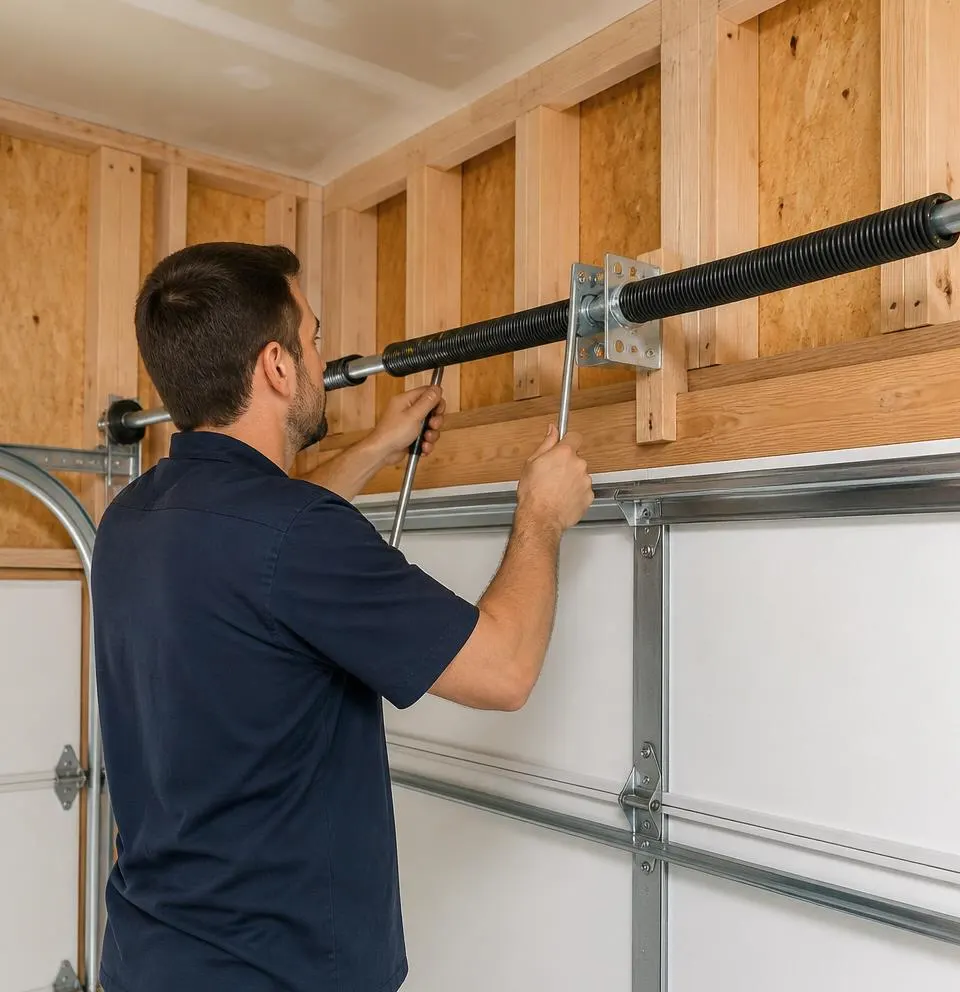
Cold makes metal contract and grease thicken, which is why doors that moved smoothly all summer start to hesitate once temperatures drop. Hinges, rollers, and the torsion spring itself all need a light coat of lubricant made for garage doors — a silicone-based or lithium-based spray, not WD-40, which is a degreaser and will actually strip the protection these parts need.
- Wipe down the tracks first to remove summer dust and grime.
- Apply lubricant to the hinges, roller bearings, and the spring, letting it work into the joints rather than just coating the surface.
- Run the door up and down a couple of times to work the lubricant in, then wipe off any excess so it doesn't attract grit.
Do this now, before the first deep freeze sets in, and you'll avoid the stiff, jerky movement that puts extra strain on the opener and the cables.
Deal With Salt and Grit Before It Settles In
Once plows and salt trucks are out, that residue ends up on tires, boots, and eventually the garage floor and lower door panels. Salt is corrosive, and if it sits against metal tracks, hardware, or an older steel door panel all winter, it accelerates rust. A quick rinse of the lower door and tracks every few weeks during active snow season — and a wipe-down of any visible salt residue — goes a long way toward protecting hardware that's already dealt with a few winters.
If your home still has its original garage door from decades ago, this matters even more. Older doors often have thinner gauge steel and less corrosion resistance than newer models, so staying ahead of salt buildup can meaningfully extend the life of a door you'd rather not replace yet.
Check the Opener and Think About Power Outages
Nor'easters and ice storms are part of the deal here, and they bring down power lines along with the snow. If you depend on your garage as a main entry point, it's worth testing the manual release now, while it's easy to see what you're doing, rather than fumbling for it by flashlight during an outage. Also check:
- The battery backup, if your opener has one — test it by unplugging the unit and confirming the door still operates.
- The safety sensors near the floor, making sure they're aligned and the lenses are clean of summer dust or cobwebs.
- The remote and keypad batteries, since cold weather drains them faster.
Older Doors Need a Closer Look
A lot of homes in this area still have their original garage door, and older doors weren't always built with today's insulation standards. If your garage feels noticeably colder than it should, or you can feel cold air radiating off the door itself on a frigid night, that's a sign the panel insulation (or lack of it) is working against you. Sometimes the fix is as simple as adding a reflective insulation kit to the inside of the panels; other times, if the door is also showing rust, warping, or panel separation, it may be more cost-effective in the long run to replace it than to keep patching an aging door through another freeze-thaw cycle.
When to Call New Eagle Garage Door
If your door is sticking, grinding, or sagging on one side despite fresh lubrication, or if you're seeing rust spreading along the tracks or bottom panel, those are signs worth having looked at before winter is in full swing. Our Garage Door Maintenance visits cover exactly this — full inspection, hardware lubrication, seal check, and spring tension, so small issues get caught before a cold snap turns them into a stuck door at 6 a.m. If a spring has already lost tension or snapped, our Spring Replacement service gets that handled safely and correctly, since springs under winter load are not something to troubleshoot yourself.
If you're in New Eagle, Monongahela, Finleyville, Donora, Charleroi, Belle Vernon, Rostraver Township, or Carroll Township and want your garage door checked before the next hard freeze, give New Eagle Garage Door a call. We'll get it running right and keep it that way through the winter.