
The short answer
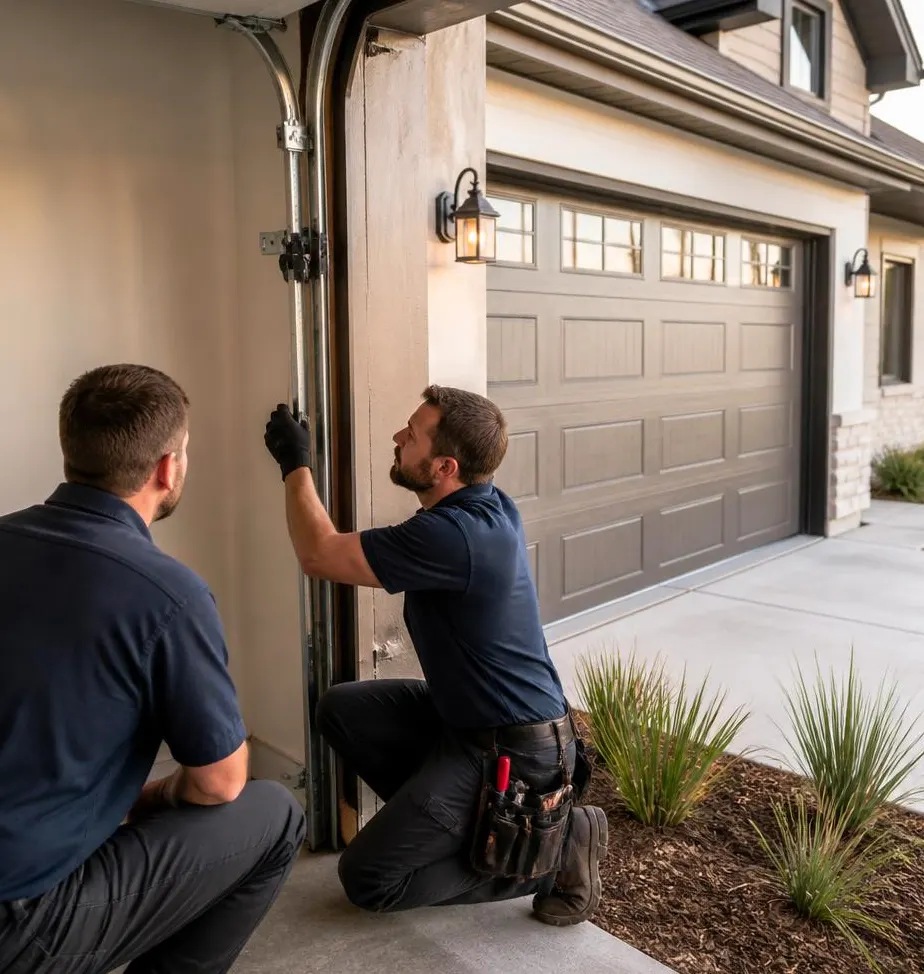
You don't need a new door. If the panels aren't rusted through, warped, or cracked, and the thing still opens and closes without drama, the door itself can usually stay. What actually matters on a door from the 1990s or earlier is the safety hardware — specifically the stuff that keeps a 150-pound door from coming down on a person, a pet, or a car. That's a short list, and it's worth fixing. Everything else is largely a style and comfort question, not a safety one.
What needs to be retrofitted, no debate
Photo-eye sensors
If your opener doesn't have two small sensor eyes mounted about six inches off the floor on each track, the door has no way to detect something in its path before it closes. This became standard well after a lot of these older systems were installed. If you don't see them, or they're there but one is cracked or hanging loose, this is the single most important upgrade to make. It's a relatively quick fix for a technician and it's not something to leave to chance with kids or pets around.
Auto-reverse function
Even if photo eyes are present, test the mechanical reversal: place a 2x4 flat on the ground where the door closes. If the door doesn't reverse on contact, the force/limit settings are off or the mechanism has failed. This should be tested every few months anyway, but on an older system it's worth confirming it was ever set correctly in the first place.
Spring containment
Older torsion spring setups sometimes have no containment cable running through the spring. If that spring ever snaps — and age plus our freeze-thaw winters speeds up metal fatigue — an uncontained spring can whip hard enough to damage the header or injure someone standing nearby. A containment cable is cheap insurance and should be added if it's missing.
Manual release handle
If the emergency release cord is brittle, missing, or you genuinely don't know what it does, that's a problem. In a power outage or opener failure, this is how you get the door open manually. Test it now, not during an actual emergency.
What's fine to leave alone
- Original wood or steel panels that aren't delaminating, rusting through, or sagging. Cosmetic wear isn't a safety issue.
- A well-maintained torsion spring system that's properly balanced (see our balance test guide) and free of heavy rust or corrosion.
- Non-insulated doors if the garage isn't a heated or regularly used living space. Insulation is a comfort and energy upgrade, not a safety requirement.
- Original tracks if they're straight, tightly bolted, and not making grinding or popping noises when the door runs.
Why our weather changes the math
Humid summers followed by salty, icy winters are hard on exposed metal hardware. Hinges, spring coils, and cables on an older door have likely gone through thirty-plus freeze-thaw cycles, and road salt tracked in on tires or boots accelerates rust on anything near the floor — including those photo-eye brackets and bottom hinges. A door that looked fine five years ago can have hidden corrosion now, especially on hardware that was already approaching the end of its service life. This is exactly why the containment cable and sensor check matter more here than they would in a drier climate.
When to call New Eagle Garage Door
If you've checked the photo eyes, tested auto-reverse, and still aren't sure whether your spring setup is safe, that's the point to stop guessing. We offer Garage Door Maintenance visits that cover exactly this list — hardware inspection, lubrication, balance and sensor checks — and if a spring or cable is worn past safe use, our Spring Replacement service handles that properly, including containment cables, without needing to replace the whole door.
If you're in New Eagle, Monongahela, Finleyville, Donora, Charleroi, Belle Vernon, Rostraver Township, or Carroll Township and you want a straight answer on what your older door actually needs, give New Eagle Garage Door a call. We'll tell you honestly what to fix and what to leave alone.